How Long Does a Gaming PC Last? A Practical Guide to Performance, Upgrades, and Value

A gaming PC does not suddenly become obsolete on a particular birthday. A well-built system can boot, run games, and handle everyday work for many years. The more useful question is: how long will it meet your expectations?
For many buyers, a thoughtfully balanced gaming PC provides a satisfying experience for roughly five to seven years before a major rebuild makes sense. Some owners will upgrade a graphics card after three or four years and keep the rest of the system longer. Others who play demanding new releases at 4K, use ray tracing, or expect very high frame rates may want an upgrade sooner.
What matters most is not the calendar. It is the gap between what your PC can deliver and what your monitor, games, and workload demand.
Quality components can physically last a long time. A good power supply, motherboard, CPU, case, and memory kit often serve through several years of normal use. Storage drives, cooling fans, and graphics cards can also last for years, although any electronic component can fail unexpectedly.
Heat, dust, poor-quality power delivery, and inadequate cooling shorten component life. This is one reason a cheap case with restricted airflow and an unknown power supply is not truly a bargain. The parts may look impressive on a spec sheet, but the system surrounding them matters.
This is what most people mean when asking how long a gaming PC lasts. A system remains performance-relevant until it can no longer deliver the image quality and frame rate you consider acceptable in the games you play.
Someone playing esports titles at 1080p may be perfectly happy with hardware long after it stops being ideal for newly released, visually demanding games at 4K. Likewise, a 60Hz monitor places very different demands on a PC than a 165Hz or 240Hz monitor.
A platform’s lifespan is about practical upgrades. Can you add more storage? Install a stronger GPU without needing a new power supply? Is there room for more memory? Does the CPU and motherboard still make sense with a future graphics card?
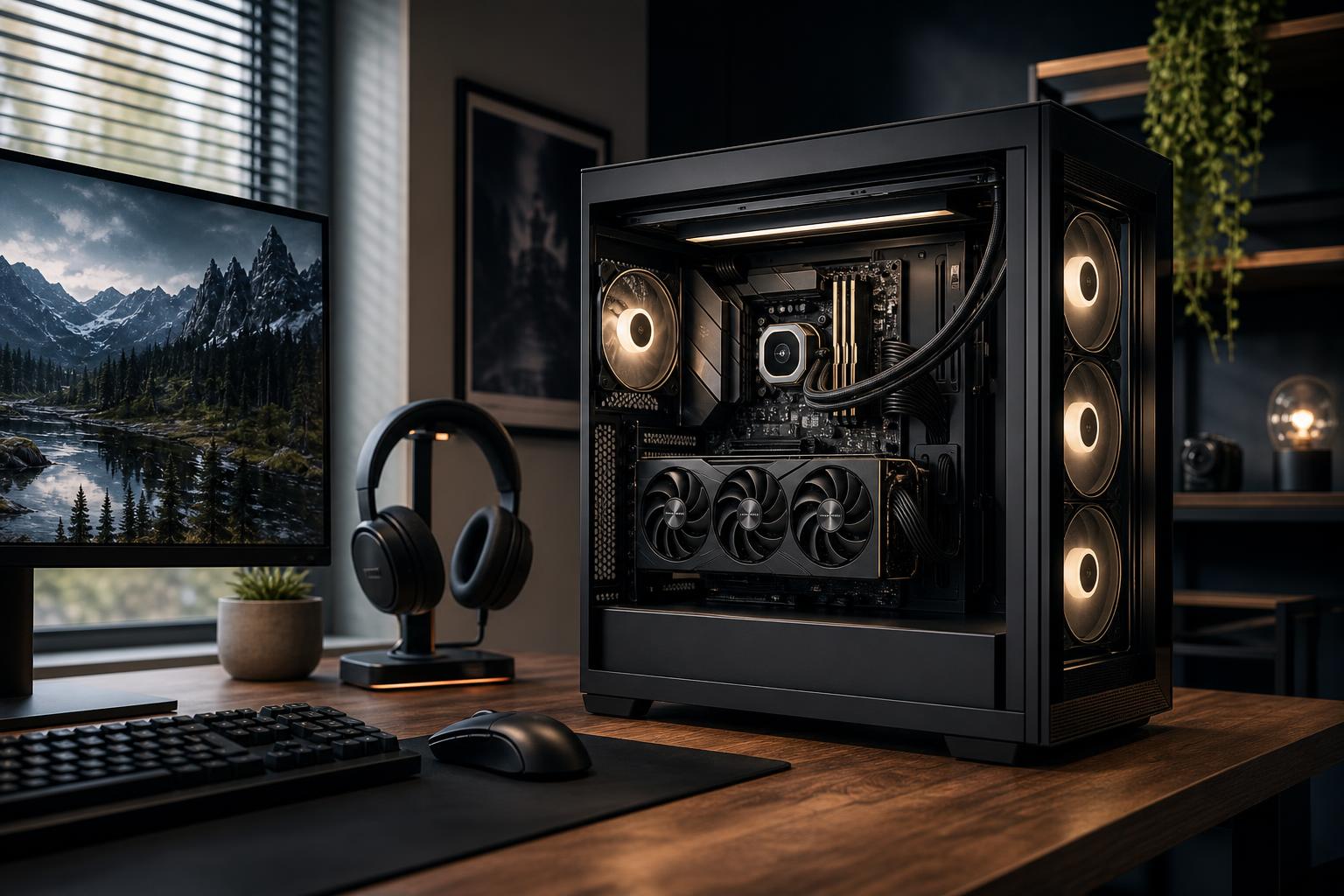
A PC with a sensible motherboard, adequate power supply capacity, a roomy airflow-focused case, and standard components gives you more options. It may not prevent every future upgrade, but it can turn a full replacement into a targeted, less expensive refresh.
Resolution and refresh rate have an enormous effect on the hardware you need. At 1080p, the CPU can be the limiting factor in high-frame-rate games because the graphics card finishes each frame quickly. At 4K, the graphics card carries much more of the load.
There is no shame in reducing a few settings. High-quality presets often look very close to ultra settings while running noticeably better. “Ultra” is frequently a screenshot preset, not the sensible long-term setting for every game.
Competitive games such as Valorant, Rocket League, League of Legends, and many racing or strategy titles generally remain playable on older hardware for a long time. Large open-world games, demanding simulators, and new cinematic releases tend to raise the bar faster.
Mods can change the equation too. A heavily modded Skyrim, Cities: Skylines install, or simulation setup may stress CPU performance, memory capacity, and storage more than the base game. If that is your use case, build for it from the start.
A PC can have years of useful life left even when it no longer runs every new game at maximum settings. Using sensible settings, upscaling technologies where they look good, and a reasonable frame-rate cap can extend the life of a system considerably.
If you want native-resolution 4K, maximum settings, heavy ray tracing, and consistently high frame rates in the newest games, buy with that goal in mind. That is a valid preference, but it is a premium target—not the baseline for a good gaming experience.
For a gaming-focused desktop, the GPU usually determines when the PC starts to feel behind. New games increase their graphics demands over time, and higher monitor resolutions make that pressure arrive sooner.
Graphics memory matters as well. A GPU may still have plenty of processing power, but limited VRAM can force lower texture settings in newer games or cause uneven performance. It is wise to choose enough VRAM for your intended resolution rather than buying solely on the basis of a product name.
A strong modern gaming CPU can remain capable through more than one graphics card generation, especially for 1440p and 4K gaming. CPU upgrades become more compelling when you play CPU-heavy simulations, chase extremely high refresh rates, stream while gaming, or notice that a newer GPU is being held back in your usual games.
For a balanced gaming PC, do not overspend on the CPU at the expense of the graphics card. But do not pair an expensive GPU with an entry-level CPU, minimal cooling, and weak memory either. That is how buyers end up with impressive-looking parts and inconsistent real-world results.
RAM capacity is one of the more straightforward upgrades. If your games, background applications, or mod packs regularly fill available memory, adding or replacing RAM can improve day-to-day smoothness. For a new gaming PC, 32GB is a sensible starting point for many buyers who want comfortable headroom.
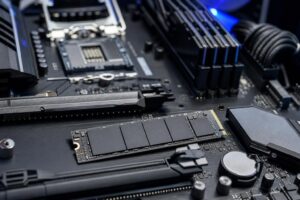
Storage capacity does not directly increase frame rates, but a nearly full drive makes PC ownership annoying quickly. Modern games are large, and creative projects are larger. A fast NVMe SSD with enough capacity for your operating system, active games, and working files makes a meaningful difference to load times and general responsiveness.
Future-proofing has limits. Nobody can guarantee what games will require five years from now. The practical goal is to avoid buying a system that is already compromised for your current needs.
Upgrade the graphics card first if your current system still feels responsive, your CPU is reasonably modern, and gaming performance is the main issue. Before buying, confirm physical clearance in the case, power supply capacity and connectors, and whether the CPU is likely to limit the new card at your preferred games and resolution.
Consider a broader rebuild when several major parts are limiting you at once: an older CPU platform, insufficient RAM, no practical high-speed storage expansion, a low-quality or undersized power supply, and a GPU that no longer meets your target. Replacing one part at a time can become poor value when the foundation needs attention too.
A good gaming PC should not be treated as disposable. Build it around the games you play, the monitor you own, and the performance level you genuinely want. Maintain it by keeping dust under control, monitoring temperatures if behavior changes, and leaving some free space on your SSD.
For most people, the best long-term value comes from a balanced system with a clear graphics-card upgrade path—not from buying the most expensive component available or from cutting corners on the parts nobody sees.
If you are planning a new system or deciding whether an existing PC is worth upgrading, Overclock Computers can help configure a build around your games, monitor, applications, performance goals, and budget. The right answer might be a focused GPU upgrade, a balanced new gaming PC, or a workstation that handles both work and play without wasting your money.